As 2026 nears its end, the world economy is doing better than many forecasters feared a year ago, yet few economists are relaxed. In its October outlook, the IMF projected that global growth will slow from 3.5% in 2025 to 3.1% in 2026 before picking up to 3.4% in 2027. The Fund left its 2026 number essentially unchanged from April and nudged 2027 upward. The report’s title pairs the ideas of resilience and strain, which captures the mood well. The system is holding, but under pressure, and the pressure is not evenly shared. cgtn
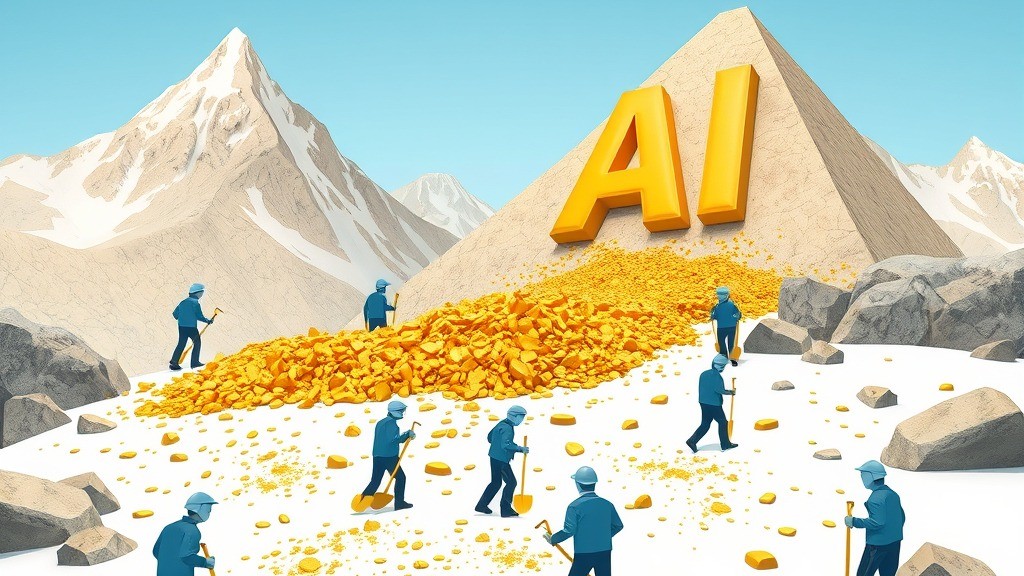
AI spending is doing the heavy lifting
The most important driver of growth right now is not consumers or exporters but investment in artificial intelligence. The IMF’s managing director said at the Bangkok meetings that accelerating investment in AI infrastructure was a key factor keeping global growth near 3%. Chips, data centres, power generation and networking have become a major source of demand in the United States, parts of Asia, the Gulf and, increasingly, India. cgtn
This is a double-edged story. Heavy spending props up output today, but it concentrates risk in one theme. The Fund has warned that market corrections could tighten financial conditions, with spillovers to economies integrated into technology supply chains and with stakes in technology stocks. Coverage of the report also stressed that the payoff from AI is uneven. Some firms and countries are capturing large gains, while others are paying for the buildout without yet seeing productivity improvements. If the promised productivity gains arrive slowly, the investment boom could cool faster than the broader economy can adjust. imfhrreporter
An energy shock from the Middle East
The second major force is energy. Forecasters point to an energy shock from the war in the Middle East, along with trade uncertainty, as a drag on activity. Canada illustrates the damage: its 2026 growth forecast was cut to 1.1%, down from 1.9% in 2025 and 0.4 percentage points below the April projection. Australia is in a similar position, with an outlook clouded by elevated global inflation and commodity price volatility. Global economic outlook cuts Canada’s 2026 growth forecast to 1.1 per cent +2
Energy shocks matter because they travel through the whole economy. Higher fuel and power costs raise transport and manufacturing costs, squeeze household budgets and complicate the work of central banks, which must decide whether to look through a price spike or respond to it. The IMF has urged central bankers to stick to their price stability mandates. Importing economies are not equally exposed. Some, like India, have so far absorbed the shock better than expected, with Moody’s citing the economy’s resilience to higher global energy prices when it raised its growth forecast. bankygatenewsonair
The debt overhang
Underneath the headline numbers sits a quieter problem. An IMF official recently noted that global public debt is nearing 100% of GDP, the highest since World War Two. That level of borrowing was manageable when interest rates were near zero. It is far harder to sustain when governments must refinance at higher rates while also paying for defence, ageing populations, energy security and the climate transition. bankygate
The consequence is a narrowing of policy room. Governments that want to cushion citizens from an energy shock or invest in new industries must weigh those goals against bond-market tolerance. Countries with weaker credibility face the sharpest trade-offs, because their borrowing costs can jump quickly if investors lose patience.
A world growing in different directions
The IMF’s picture is of a split outlook. Among the larger economies, the October update showed that India and Germany received sizeable upgrades to growth, as noted by former IMF deputy managing director Gita Gopinath, who described a world that is resilient but precariously poised. India is forecast to grow 7% on a fiscal-year basis, while US growth is projected at 2.3%. Slower expansion in several advanced economies, set against faster growth in large emerging markets, is reshaping where global demand comes from and where investors look for returns. IMF upgrades 2026 growth forecast but warns of ‘split’ outlook +2
What to watch in 2027
Several indicators will decide whether the soft landing holds. The first is energy prices: a sustained fall would ease inflation and lift real incomes quickly, while another spike would reverse the gains. The second is technology valuations and capital spending plans, since a pullback in AI investment would remove a pillar of growth. The third is trade policy, where tariff deals and retaliation continue to shift the cost of doing business across borders. The fourth is the bond market’s patience with high debt.
For ordinary households, the lesson is that the headline growth rate hides large differences in experience. A world growing around 3% can still feel tight for a Canadian homeowner facing energy costs, while it feels buoyant for an Indian consumer enjoying strong domestic demand. The IMF’s call for urgent choices is a reminder that today’s resilience is partly borrowed, from debt, from AI enthusiasm and from the patience of markets. Policymakers who use this window to build buffers will be better placed than those who treat it as proof that the hard part is over.