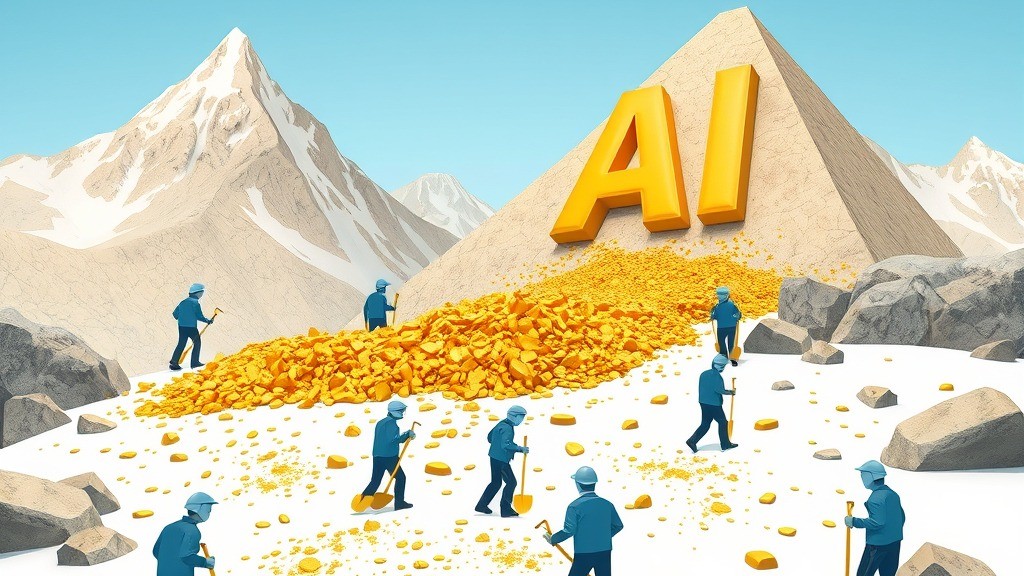
India is no longer content playing catch-up in the global artificial intelligence race — it’s building its own runway. Across boardrooms, government offices, and scrappy startup garages, a quiet but forceful transformation is underway, one that promises to touch everything from how farmers get crop advice to how banks detect fraud.
From Consumer to Creator
For years, India’s relationship with AI was largely that of a consumer: adopting tools built in Silicon Valley, licensing foreign models, and outsourcing the heavy engineering elsewhere. That story is changing fast. The country is now home to more than 170 dedicated AI startups that have collectively raised over $2.6 billion, building everything from large language models to quantum-AI hybrid platforms. Bengaluru-based Sarvam AI, handpicked by the government to build India’s sovereign large language model under the IndiaAI Mission, recently unveiled two new models — Sarvam-30B and Sarvam-105B — at the India AI Impact Summit 2026, cementing its unicorn status at a $1.5 billion valuation.
This isn’t just about chatbots that speak English. India’s AI ecosystem is being built with a distinctly local flavor: models trained to understand Hindi, Tamil, Telugu, Bengali, and dozens of other languages, designed for a country where linguistic diversity is both a challenge and an opportunity. Companies like Yellow.ai and Gnani.ai are betting big on multilingual AI products that can serve a billion-plus population in the language they actually speak at home.
Sovereign Infrastructure Takes Center Stage
Perhaps the most striking shift in 2026 is India’s push to own its AI infrastructure rather than rent it. The government has rolled out a tax holiday extending until 2047 for companies that build data-center infrastructure within Indian borders to serve global markets — a clear signal that India wants to be a compute powerhouse, not just a software shop. Global giants have taken notice. Reliance Industries, Tata Group, and Larsen & Toubro have all struck partnerships with the likes of OpenAI and NVIDIA to strengthen the country’s computing muscle, essentially building the digital plumbing that future AI applications will run on.
Analysts see this as a deliberate long game. According to a joint report by Google and Inc42, India’s AI market could balloon into a $126 billion opportunity by 2030, with a potential GDP impact of $1.7 trillion by 2035. Enterprise AI — the unglamorous but lucrative business of helping companies automate workflows, cut costs, and make smarter decisions — is expected to lead that charge, while consumer-facing AI products ride the wave of a smartphone-savvy, increasingly online population.
Enterprises Are Moving Beyond Pilots
The corporate mood has shifted too. Microsoft India’s leadership has been urging companies to pair AI adoption with genuine human judgment, warning against chasing shiny pilots without clear returns. That message seems to be landing. MathCo, an enterprise AI and analytics firm marking a decade in business, recently announced a full transition to an “AI-native” way of working, a shift expected to create more than 2,000 specialized AI roles and support triple-digit growth over the next four years. It’s a sign that Indian enterprises are done experimenting at the edges and are now rewiring core operations around AI.
Meanwhile, the startup pipeline keeps churning. Google’s Startups Accelerator program for India selected just 20 AI-first startups out of a staggering 2,500 applications for its 2026 cohort — a ratio that says as much about the sheer volume of ambition in the ecosystem as it does about the selectivity of the process. Healthtech is proving to be fertile ground too: Bengaluru’s Ultrahuman recently raised $70 million from investors including Qualcomm Ventures and Labcorp, aiming to evolve from a wearable-device company into what it calls a “human-computer interface” business focused on the human body itself.
Why This Moment Matters
What makes India’s AI trend particularly interesting isn’t just the scale of investment — it’s the intent behind it. Rather than simply importing technology, the country is trying to solve distinctly Indian problems: bridging language gaps, extending healthcare access to underserved regions, and building financial tools for a population that skipped credit cards and went straight to mobile payments. The AI story here isn’t just about efficiency for the few; it’s being pitched as an equalizer for the many.
Of course, challenges remain. Talent shortages, data privacy questions, and the risk of AI deepening rather than closing existing inequalities are real concerns that policymakers and founders alike will need to navigate carefully. But for now, the momentum is undeniable. With sovereign models rolling out, global tech giants investing in local infrastructure, and enterprises rewriting their operating playbooks, India’s AI moment feels less like a passing trend and more like the opening chapter of a much bigger story — one that could define the country’s economic trajectory for the next decade.